





How to Reduce Breakage Rates of Fragile Item Packaging?
To reduce breakage rates of fragile item packaging, businesses must apply scientific cargo packaging standards. Select appropriate packaging materials based on the characteristics of the items, maintain sufficient cushioning thickness (5-12 mm depending on size/weight), and ensure proper securing and sealing. This systematic approach can reduce breakage rates during air freight packaging and transportation by more than 80%.
Table of Contents
As a professional warehousing and cargo packaging service provider, we understand that fragile item packaging is one of the most critical challenges in international logistics. Glassware, precision instruments, ceramics, and handicrafts suffer from high breakage rates due to their fragile materials and poor impact resistance. Besides direct product loss, breakage can lead to delivery delays, customer claims, and reputational damage.
Why are fragile items easily damaged during transportation?
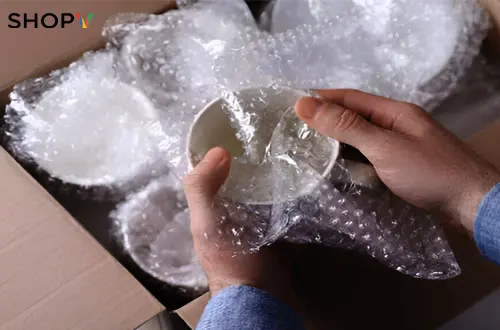
Fragile items such as glassware, ceramics, handicrafts, and precision instruments inherently have poor impact resistance. During international shipping—especially by air—parcels undergo multiple stages including sorting, loading, unloading, vibration, and stacking. Without proper packaging standards, these forces can cause internal collisions or stress on vulnerable parts of the product. Simply adding more layers of packaging material is not always effective. Professional logistics providers focus on structured cushioning, stabilization, and sealing technologies to protect fragile goods.
Without professional fragile item packaging, the following risks typically occur:
Impact damage during handling or turbulence
Collision between items due to internal movement
Compression damage from stacking
Moisture and dust contamination. For e-commerce sellers and B2B exporters, breakage not only leads to product loss but also customer claims, delivery delays, and increased logistics costs.
Many e-commerce sellers mistakenly believe that "adding more layers of packaging" equals better protection. However, unscientific overpacking not only wastes materials but also increases volumetric and weight costs without improving safety. The key is to develop a tailored cushioning packaging solution based on the specific characteristics of the goods and standardize the operation of packaging materials, cushioning thickness, and securing methods.
Core Principles of Fragile Item Packaging
Cushioning and Shock Absorption: Absorbs impacts and vibrations during transport to prevent direct force transfer to fragile items.
Securing and Shock Absorption: Eliminates internal movement and friction to prevent breakage. Even well-packaged items can be damaged if moved within the box. Proper securing prevents movement, slippage, and friction within the packaging.
Sealing and Moisture Protection: Prevents moisture and dust, which is crucial for delicate electronics and instruments. Effective sealing prevents moisture, dust, and contamination, all of which can damage fragile or valuable items.
Key Elements of Cargo Packaging Strategy
Step 1: Choosing the Right Cushioning Material
Choosing the right packaging material is fundamental to effective fragile item packaging. Each material has different cushioning properties and applications. A proper combination of these materials can significantly improve the reliability of air freight packaging.
Commonly Used Materials in Fragile Item Packaging:
- Pearl Cotton (EPE Foam)
Recommended thickness: ≥5 mm. Soft and shock-absorbing, ideal for storing small fragile items such as glass ornaments or musical instruments.
- Bubble Wrap
Recommended number of layers: 3-5 layers. Moderate cushioning, cost-effective, suitable for medium-sized fragile items.
- Foam Board
Can be cut to fit the product shape. Strong structural support, ideal for storing large fragile items such as ceramics or precision equipment.
- Airbags/Air Pillows
Excellent gap filling, prevents internal movement of the box.
- Corrugated Cardboard
Provides external structural strength and stackability. Double-layer corrugated cardboard packaging is typically used for medium-weight fragile items.
Step 2: Determine Standard Cushioning Thickness Based on Goods Specifications
Use the following weight and volume-based standards to avoid "overpacking" and "underpacking":
Small Fragile Items
(Weight < 1 kg, Dimensions < 10 cm × 10 cm)
Wrap with 5-8 mm pearl cotton or 3-4 layers of bubble wrap, outer corrugated cardboard box, and fill internal gaps with air cushions.
Medium Fragile Items
(Weight 1-5 kg, Dimensions 10 cm × 10 cm to 50 cm × 50 cm)
Use 8-12 mm foam board or 8-10 mm... Wrapped in millimeter-thick pearl cotton, double-layer corrugated cardboard box, secured with foam blocks on all six sides (top, bottom, and four sides).
For large, fragile items (weight > 5 kg, dimensions > 50 cm x 50 cm):
Custom foam molds perfectly fit the cargo's contours; outer solid wood frame ensures structural integrity; cushioning material is used between the frame and the outer box to prevent frame deformation.
Step 3: Standardized Securement and Sealing
Professional air freight packaging requires special attention to the final securing stage:
Securing: Use cushioning materials or reinforcing tape to ensure zero movement of the cargo.
Corner Protection: Wrap irregularly shaped items to prevent concentrated stress on vulnerable areas.
Sealing: Apply waterproof tape along all seams to prevent moisture penetration.
Labeling: Affix warning labels such as "Fragile," "Handle with Care," and "Do Not Crush" to ensure proper handling.
Other Professional Advice:
Work with experienced suppliers: Choose freight forwarders with proven experience in packaging fragile items and assign dedicated personnel to handle the process.
Optimize Routes: Prioritize direct flights to minimize transshipment—one of the main causes of cargo damage. Risk Management: Purchase comprehensive cargo insurance with clearly defined damage compensation clauses.
Quality Assurance: Conduct pre-shipment shake tests to verify cushioning and securing effects.
Frequently Asked Questions (FAQ)
Q: What is the difference between standard packaging and professional fragile goods packaging?
A: Standard packaging focuses on the containment of goods; professional fragile goods packaging uses scientifically selected packaging materials and standardized thickness standards to achieve shock absorption, secure goods, and environmental protection.
Q: How to choose between pearl cotton and bubble wrap?
A: For small, high-value items requiring advanced protection, use pearl cotton. For cost-sensitive medium-sized goods, if moderate cushioning is sufficient, choose bubble wrap.
Q: Do all fragile items require double-walled corrugated cardboard packaging?
A: Double-walled corrugated cardboard packaging is essential for items weighing 1 kg or more. For small, lightweight items weighing less than 1 kg, single-walled corrugated cardboard packaging may be sufficient if there is sufficient internal cushioning material.
Q: What value-added services should I look for when choosing a logistics partner?
A: Looking for suppliers who can provide custom foam molding, pre-shipment shake testing, direct flight routes, comprehensive insurance plans, and specialized fragile goods handling processes.
Q: Do you offer customized packaging solutions for specialty products?
A: Yes, we develop tailored cargo packaging strategies, including custom foam molding, specialized wooden crates, and temperature-controlled packaging solutions for precision instruments and artwork.
How Shopv International Order Fulfillment Helps Protect Fragile Goods
For B2B sellers and cross-border e-commerce businesses, professional logistics partners provide specialized value-added services that significantly reduce the risk of cargo damage.
Shopv International Order Fulfillment Services include:
Professional Air Freight Packaging Solutions
Customized Fragile Goods Packaging Solutions
High-Quality Packaging Materials and Cushioning Systems
Reinforced Corrugated Cardboard Packaging
Safe Warehouse Packaging Processes
Global Shipping Coordination and Tracking
Cargo Insurance and Risk Management
These value-added services help businesses safely transport fragile goods while reducing operational complexity and logistics costs. Our standardized processes have helped B2B clients and e-commerce sellers reduce breakage rates by over 80%. If your business frequently ships fragile goods to international markets, partnering with a professional logistics provider can significantly reduce packaging risks while improving logistics efficiency. Shopv International Order Fulfillment Service offers customized fragile goods packaging solutions, global shipping expertise, and reliable cargo packaging processes, tailored for cross-border e-commerce and B2B sellers.
Ready to protect your fragile goods? Contact Shopv today to learn how our professional air freight packaging and value-added services can ensure your products' safety and enhance customer satisfaction.








