





Seasonal Inventory Management: How to Avoid Stockouts, Overstock, and Delays
Seasonal inventory is the biggest profit volatility factor in annual supply chain operations. For global e-commerce sellers and B2B companies, successful peak season inventory management is not only about having enough products available—it is about having the right inventory, in the right warehouse, at the right time.
Table of Contents
- What Is Seasonal Inventory? Core Characteristics Different From Conventional Inventory
- Why Seasonal Inventory Management Determines B2B Annual Profitability
- The Importance of Effective Seasonal Inventory Management
- 7 Strategies for Seasonal Inventory Management
- Common Seasonal Inventory Problems and Solutions
- How Shopv Helps Businesses Manage Seasonal Inventory
- Frequently Asked Questions About Seasonal Inventory Management
Many brands either blindly stock up a large amount ofpeak season inventory leading to post-season overstock, capital occupation, and high storage costs; or underestimate seasonal demand, resulting in peak stockouts, missed sales windows, and damaged B-end customer trust.
Different from conventional stable-demand inventory, seasonal inventory has the characteristics of short sales cycle, explosive demand concentration, and easy obsolescence. Conventional inventory management methods are completely unable to adapt to seasonal fluctuations.
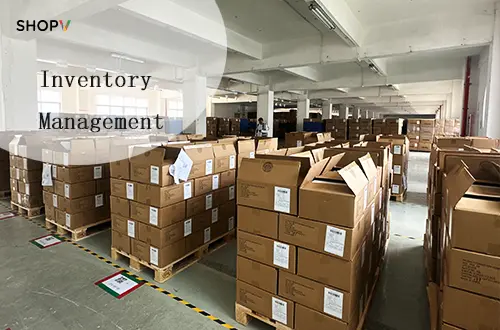
Unlike steady‑demand SKUs, seasonal items compress high volume into a short window. That creates three core challenges:
- Capacity strain: Sudden surges in inbound shipments, storage needs, and outbound orders.
- Time pressure: You must have stock in the right places before demand peaks, not after.
- Risk of overstock: If you miscalculate, you’re left with bulky inventory and low sell‑through.
For B2B and bulk buyers, these issues are amplified by international lead times, container constraints, customs clearance, and the need to coordinate multiple warehouses and distribution centers.
What Is Seasonal Inventory? Core Characteristics Different From Conventional Inventory
|
Comparison Dimension |
Seasonal Inventory |
Conventional Regular Inventory |
|---|---|---|
|
Demand Feature |
Concentrated explosive peak demand with sharp off-season decline |
Stable and balanced demand throughout the year |
|
Sales Cycle |
Short, fixed sales window with a high risk of missing market opportunities |
Long-term continuous sales with predictable demand patterns |
|
Inventory Risk |
Higher risk of overstock, product obsolescence, and stockouts during peak periods |
Lower risk with more controllable inventory turnover |
|
Logistics Requirement |
Requires flexible peak-season warehousing, dynamic inventory allocation, and rapid fulfillment capabilities |
Relies on fixed warehousing capacity and stable daily delivery processes |
|
Management Focus |
Peak-season stock preparation, real-time inventory adjustment, and post-season clearance |
Daily inventory turnover management and safety stock maintenance |
Seasonal inventory typically has:
- Short, intense sales windows (e.g., Christmas, Ramadan, Black Friday, back‑to‑school).
- High demand volatility around the peak.
- A clear “after‑season” where normal demand drops sharply.
Inventory management for seasonal products must therefore:
- Plan months in advance for manufacturing + international freight.
- Pre‑position bulk inventory in key markets before the surge.
- Include explicit post‑season clearance and returns strategies.
By contrast, regular inventory management assumes more stable demand and can rely on smoother replenishment cycles.
Seasonal inventory refers to products whose demand peaks at specific times of the year (e.g., holidays, weather-related events, or special occasions).
Unlike regular inventory, which has relatively stable demand and a wide variety throughout the year, seasonal inventory requires unique planning, storage, and fulfillment strategies to ensure the right products are available when customers need them most.
Unlike standard inventory with relatively stable demand, seasonal inventory has a limited sales window. Poor planning can result in two major problems:
- Stockouts: Products run out during peak demand, causing lost sales and customer dissatisfaction.
- Overstock: Unsold seasonal goods occupy warehouse space and tie up working capital.
Effective inventory management helps businesses balance product availability with storage costs.
Why Seasonal Inventory Management Determines B2B Annual Profitability
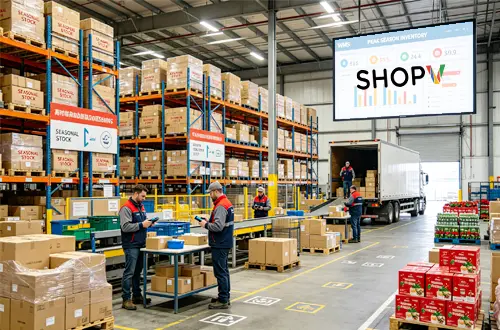
Effective seasonal inventory management is crucial for cross-border B2B bulk logistics and brand operation:
1 Maintain Healthy Profit Margins
To achieve the maximum return on investment in inventory, you need to take full advantage of peak demand periods. Poor planning can lead to costly inventory build-ups, understocking, and missed sales opportunities. For B2B bulk sellers, a single seasonal overstock will occupy tens of thousands of working capital and generate long-term warehousing and demurrage costs.
2 Stabilize Customer Satisfaction and Brand Reputation
B-end buyers have stricter requirements on delivery timeliness and order stability during peak seasons. Failure to meet bulk order delivery demands will lead to order delays, customer complaints, and even long-term cooperative relationship termination, seriously damaging brand reputation.
3 Avoid Cross-Border Logistics Additional Risks
Peak season port congestion, warehouse explosion, and labor shortages are common industry problems. Scientific seasonal inventory planning can avoid emergency temporary shipping, expensive peak logistics premiums, and bulk cargo detention fees caused by improper stocking.
The Importance of Effective Seasonal Inventory Management
1. Prevent Stockouts During Peak Demand
During major sales periods such as Black Friday, Christmas, or promotional campaigns, customers expect fast delivery.
Insufficient inventory can lead to:
- Lost revenue opportunities
- Lower marketplace rankings
- Negative customer reviews
- Reduced customer loyalty
Accurate forecasting allows businesses to prepare enough stock before demand peaks.
2. Reduce Excess Inventory After the Season
Seasonal products often lose value quickly after the selling period ends.
For example:
- Holiday decorations after Christmas
- Summer products after the season ends
- Festival-related merchandise after the event
Effective inventory management helps companies avoid unnecessary storage expenses and markdown losses.
3. Improve Customer Experience
Fast fulfillment during peak seasons directly affects brand reputation.
Customers expect:
- Accurate inventory availability
- Fast order processing
- Reliable delivery times
- Easy returns
A well-organized fulfillment network helps brands maintain service quality even during order surges.
7 Strategies for Seasonal Inventory Management
1. Data‑Driven Forecasting That Includes Lead Time and Capacity
Your inventory management model must go beyond “units sold last year.”
Key inputs for seasonal forecasting:
- Historical sales by product, region, and channel (marketplace, B2B, direct).
- Marketing calendar (promotions, launches, campaigns).
- Supplier production lead times and MOQ constraints.
- International freight lead time (production → port → destination warehouse).
- Peak‑season carrier and port congestion risk.
A simple framework:
- Build a baseline demand forecast by SKU/region.
- Add a seasonality factor (e.g., x2 or x3 baseline for peak weeks).
- Convert demand into shipment plan timing (when to ship, by which mode).
- Add buffer stock for demand spikes and supply delay.
- Translate everything into bulk container plans and warehouse capacity plans.
2. Strategic Inventory Allocation Across Regions
One warehouse is rarely enough for seasonal peaks.
Strategic inventory allocation means:
- Splitting peak season inventory across multiple locations (e.g., US East/West, EU hubs, Middle East).
- Placing high‑velocity SKUs closer to top demand clusters.
- Keeping a “buffer pool” in a central hub to rebalance stock as real sales data comes in.
Benefits:
- Shorter last‑mile delivery times.
- Reduced risk of one location running out while others still have stock.
- More flexibility to respond to unexpected demand patterns.
3. Real‑Time Inventory Visibility Across All Locations
Without visibility, your team is guessing.
An integrated system should show:
- Total seasonal inventory by SKU.
- Stock by location (warehouse, country, hub).
- Committed stock (allocated to orders) vs available stock.
- In‑transit inventory (on containers, in ports, in customs).
- Sales velocity and sell‑through rates by region.
With this data, you can:
- Spot stockout risks early and trigger emergency replenishment.
- Reallocate inventory between warehouses before problems hit customers.
- Adjust pricing and promotions based on real‑time sell‑through.
Bulk logistics providers like Shopv tie WMS (warehouse management) and TMS (transportation) data into one view, so you can see both storage and freight status in one place.
4. Optimize Warehouse Layout and Processes for Seasonal Surges
Your warehouse is a temporary factory during peak season.
Best practices for seasonal setups:
- Dedicated seasonal zones: Separate areas for seasonal SKUs to avoid confusion with regular stock.
- Fast‑pick locations: Place best‑sellers near packing stations to reduce travel time.
- Clear labeling and signage: Reduce picking errors under pressure.
- Pre‑packed sets and bundles: Create holiday packs or B2B bundles in advance to speed up picking.
- Defined pick routes: Arrange aisles and bins to minimize travel distance for seasonal orders.
For bulk operations, also consider:
- Pallet flow design (inbound vs outbound aisles).
- Staging areas for large B2B orders and cross‑docking.
5. Flexible Warehousing and Staffing for Peak Capacity
Seasonal peaks demand flexibility.
Flexible warehousing options:
- Short‑term overflow space near your main hubs.
- On‑demand pallet storage for bulk seasonal inventory.
- Temporary pop‑up fulfillment cells for pre‑packed seasonal bundles.
Flexible staffing:
- Seasonal pick/pack teams trained in advance.
- Cross‑training regular staff to handle multiple roles.
- Clear productivity targets and incentives for seasonal staff.
Automation leverage:
- Use conveyors, sorters, or semi‑automated pick systems to reduce manual steps.
- Prioritize automation for high‑volume, simple SKUs (e.g., standard boxes).
The goal is to expand capacity without over‑committing to long‑term fixed costs. Shopv offers flexible storage and labor plans aligned to your seasonal calendar, so you pay for capacity only when you need it.
6. Proactive Replenishment and Safety Stock for Seasonal SKUs
For seasonal products, traditional reorder points often fail because:
- The sales window is short.
- Replenishment lead time is long (especially for international production + freight).
- Demand volatility is high.
Instead, design a seasonal replenishment plan:
- Define maximum viable inventory (how much you can realistically sell before season ends).
- Set early‑season safety stock to protect against demand spikes and delays.
- Plan mid‑season top‑ups only if lead time and remaining season allow.
- Create a hard stop date after which you stop reordering seasonal SKUs.
Monitor:
- Sell‑through rate (units sold per day/week).
- Stock cover (how many weeks of sales your current stock represents).
- Slow‑moving SKUs that may need early promotions.
7. Post‑Season Inventory: Clearance, Storage, or Write‑Off?
The season doesn’t end when demand drops. The biggest margin leaks happen after the peak.
Main options for leftover seasonal inventory:
- Clearance promotions: Tiered discounts, bundles, or flash sales to accelerate sell‑through.
- Carry‑over storage: If product life allows, store into next season (must weigh storage cost vs. future margin).
- Alternative channels: Bulk sales to discounters, B2B deals, or regional markets with shifted seasons.
- Donation or recycling: For items that would otherwise incur high holding costs and lose value.
Critical metrics post‑season:
- Final sell‑through rate by SKU and region.
- Total landed cost vs. realized revenue.
- Storage cost per unit for leftover inventory.
- Lessons learned for next year’s forecast and allocation.
Common Seasonal Inventory Problems and Solutions
|
Problem |
Cause |
Solution |
|---|---|---|
|
Stockouts during holidays |
Poor demand forecasting and insufficient inventory preparation |
Increase safety stock levels and improve seasonal demand planning |
|
Warehouse overload |
Seasonal inventory surge exceeding normal storage capacity |
Use flexible warehouse capacity and scalable fulfillment solutions |
|
Slow fulfillment |
Poor warehouse organization and inefficient picking processes |
Optimize picking workflows and implement warehouse management systems |
|
Excess inventory |
Over-ordering caused by inaccurate seasonal sales predictions |
Improve forecasting accuracy and create post-season inventory clearance plans |
|
Shipping delays |
Late transportation planning during peak demand periods |
Arrange international logistics capacity and shipping schedules earlier |
|
High return volume |
Seasonal purchasing behavior and changing customer demand |
Improve reverse logistics processes and return inventory management |
How Shopv Helps Businesses Manage Seasonal Inventory
As an international bulk logistics and fulfillment provider, Shopv helps brands prepare for seasonal demand changes through:
Bulk Inventory Storage
Flexible warehouse solutions allow businesses to store seasonal products without committing to unnecessary long-term space.
International Fulfillment Support
Shopv helps manage:
- Receiving
- Inventory storage
- Picking and packing
- International shipping
- Returns processing
Peak Season Capacity Planning
Businesses can scale warehouse operations during:
- Black Friday
- Christmas
- Promotional campaigns
- Product launches
Inventory Visibility
Integrated logistics systems provide better control over inventory movement and fulfillment performance.
By combining warehousing, logistics coordination, and fulfillment expertise, Shopv helps businesses reduce seasonal supply chain risks and improve customer satisfaction.
Frequently Asked Questions About Seasonal Inventory Management
Should we use the same warehouse for regular and seasonal inventory?
Often, it’s better to keep a base warehouse for regular stock and add flexible seasonal space to handle surges. This avoids disrupting normal operations and keeps costs under control.
How can I prevent stockouts during peak season?
Use predictive analytics and safety stock buffers to anticipate demand surges.
What’s the best way to manage leftover seasonal inventory?
Bundle, discount, or store long-shelf-life items for next season.
Can Shopv handle global seasonal fulfillment?
Yes. Shopv offers integrated warehousing and logistics solutions across major international markets.
How does on-demand warehousing help seasonal businesses?
It provides flexible storage capacity without long-term commitments, reducing costs.
Industry Resources
For additional supply chain and inventory planning guidance:
Inventory Management Guide – Shopify Help Center
Ready to master seasonal inventory management? Partner with Shopv’s international bulk logistics services to streamline storage, optimize fulfillment, and maximize profits during every peak season.








