





How to Determine When to Partner with a Third-Party Logistics Company
Determining when to partner with a Third-Party Logistics (3PL) company comes down to a clear inflection point: when managing warehousing, customs clearance, and global fulfillment in-house begins to restrict your sales growth and exhaust your operational resources. For expanding B2B and e-commerce brands, moving from local shipping to complex international logistics requires specialized infrastructure that is rarely cost-effective to build independently.
If your business is managing split-border inventory, facing high cross-border freight rates, or losing valuable time to customs documentation, it is time to transition to a professional Third-Party Logistics Service Provider.
Table of Contents
- When to Scale: Key Business Milestones That Require a 3PL
- DIY Fulfillment vs. Third-Party Logistics: Side-by-Side Comparison
- Benefits of Partnering with an International Logistics Service Provider
- Why Choose Shopv as Your Third-Party Logistics Partner?
- Frequently Asked Questions (FAQ)
- Source References
When to Scale: Key Business Milestones That Require a 3PL
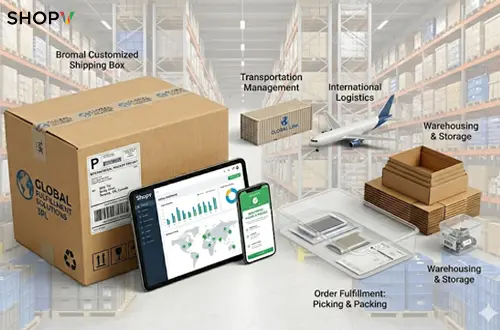
1. Your Storage & Capacity Are Limited
- You run out of space, rent expensive extra space, or store inventory in offices/retail areas
- You cannot stock enough to meet demand or launch new product lines
- You want to sell to customers in other countries but have no local storage
Without sufficient storage space, businesses often face:
- Inventory overcrowding
- Stock damage
- Receiving delays
- Reduced operational efficiency
Why 3PL helps: An international logistics service provider operates warehouses in key markets (Asia, Europe, Americas, etc.), so you store closer to buyers, cut shipping distance, and scale instantly.
2. Costs Are Rising, Margins Are Falling
- Labor, rent, shipping, insurance, and equipment costs keep increasing
- You pay high rates for small-volume shipping
- Hidden costs (errors, delays, returns, customs fines) eat into profit
Why 3PL helps: Shared facilities, negotiated carrier contracts, and efficient operations lower per-unit cost and eliminate fixed overhead.
3. You Spend Too Much Time on Logistics
- 25%+ of your team’s time goes to packing, shipping, tracking, and resolving issues
- You handle customs paperwork, compliance, and carrier disputes manually
- You have no time for marketing, product development, or strategy
Why 3PL helps: We take full responsibility for operations, documentation, and troubleshooting—freeing you to grow.
4. International Expansion Is Stalled or Risky
- You want to sell overseas but don’t know customs rules, taxes, or shipping options
- You face frequent delays, lost packages, or compliance penalties
- Delivery times are too long, hurting conversion and loyalty
Why 3PL helps: International logistics is our specialty. We handle documentation, duties, regulations, and cross-border movement end-to-end—so you enter new markets confidently.
5. Service Quality & Visibility Are Poor
- You cannot track orders or inventory in real time
- Errors, delays, and returns are increasing
- You lack data to improve or plan
Why 3PL helps: Our platform gives you full visibility, analytics, and control—anytime, anywhere.
6. Seasonal or Demand Spikes Are Hard to Manage
- You hire temporary staff, rent short-term space, or lose sales during peaks
- You overinvest in capacity that sits idle most of the year
Common warning signs include:
- Orders taking longer to ship
- Increased fulfillment errors
- Overtime labor costs rising
- Customer complaints increasing
Why 3PL helps: We scale labor, space, and transport up or down instantly—you only pay for what you use.
How do you know if your current logistics model is holding you back? Review the comparison below to evaluate where your business stands today versus the infrastructure a dedicated international logistics service provider delivers.
| Business Indicator | In-House / DIY Fulfillment | Partnering with an International 3PL |
|---|---|---|
| Order Volume & Scaling | Constrained by local staff limits; prone to holiday backlogs. | Elastic scaling that adapts to seasonal spikes seamlessly. |
| Storage & Placement | Restricted to a single hub; higher zone-based delivery costs. | Distributed inventory across global regions to lower last-mile transit costs. |
| Customs & Compliance | Prone to unexpected border delays, fines, and documentation errors. | Licensed customs brokers handling duty optimization and compliance. |
| Freight Power | Standard retail shipping rates with minimal lane leverage. | Aggregated freight volumes yielding deeply discounted tier-1 carrier rates. |
DIY Fulfillment vs. Third-Party Logistics: Side-by-Side Comparison
| Factor | DIY / In-House | Professional Third-Party Logistics |
|---|---|---|
| Cost Structure | Fixed high costs: rent, labor, equipment, insurance | Variable cost: pay per order/storage; no capital investment |
| Global Reach | Hard, slow, high risk; limited knowledge | Instant global network; full compliance & customs support |
| Scalability | Slow, costly, rigid | Fast, flexible, unlimited capacity |
| Technology | Basic or manual; expensive to upgrade | Advanced, integrated, real-time, always updated |
| Expertise | Limited learning curve; high compliance risk | Specialized knowledge; years of international experience |
| Focus | Divides attention from core business | Frees your team to grow sales & products |
| Risk | You bear all delays, errors, fines, losses | Shared risk; insurance & contingency plans included |
Benefits of Partnering with an International Logistics Service Provider
1. Global Distribution Network
Access strategically located warehouses across key markets (Asia, North America, Europe), reducing delivery times and shipping costs.
2. Cost Optimization
Leverage aggregated shipping volumes and carrier relationships to secure better freight rates and reduce overhead.
3. Advanced Technology and Visibility
Modern 3PL platforms provide real-time inventory tracking, order status updates, and analytics for smarter decision-making.
4. Operational Flexibility
Scale up during peak seasons and scale down during slower periods without long-term infrastructure commitments.
5. Compliance and Risk Reduction
Navigate complex international regulations, customs procedures, and tax requirements with expert support.
Why Choose Shopv as Your Third-Party Logistics Partner?
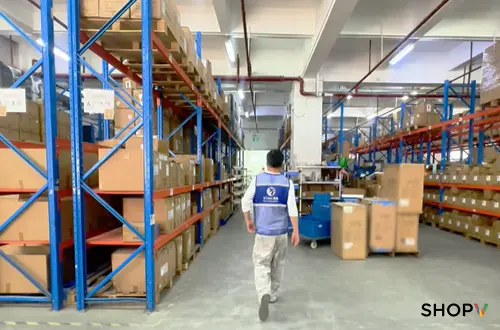
Shopv is a trusted International Logistics Service Provider designed for fast-growing B2B and eCommerce businesses seeking global expansion.
- Global warehouse network enabling faster last-mile delivery.
- Seamless integration with major eCommerce platforms and ERP systems.
- Competitive international shipping rates through strong carrier partnerships.
- Real-time inventory and order tracking dashboards.
- Expertise in cross-border logistics, customs clearance, and compliance.
By partnering with Shopv, businesses can transform logistics from a cost center into a competitive advantage—delivering faster, scaling smarter, and expanding globally with confidence.
Frequently Asked Questions (FAQs)
Can outsourcing logistics improve customer satisfaction?
Yes—faster delivery, reliable tracking, and efficient returns directly enhance customer experience.
What size business should use third-party logistics?
From early-stage growing businesses to large enterprises—any business that wants to scale, expand overseas, or improve efficiency. Even if you ship 50+ orders/month, you can save money and time; for international sales, it is almost always necessary.
How much does it cost to use a third-party logistics provider?
Pricing is transparent: usually includes storage fees, handling/packing fees, shipping costs, and optional extra services. You avoid fixed costs, and total cost is often lower than in-house when you include labor, rent, and risk.








